
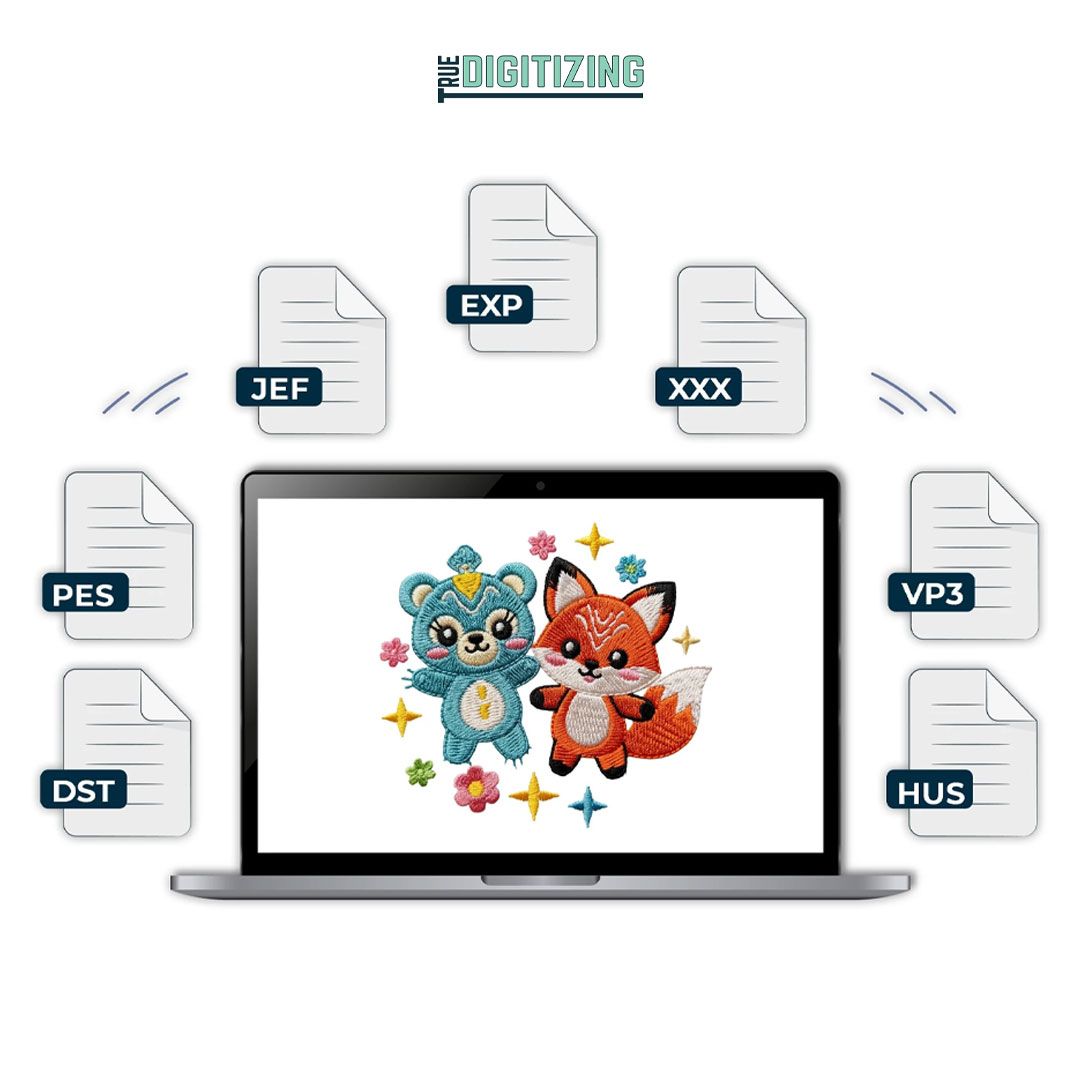
Embroidery has become an essential part of modern fashion, branding, and customization. From company logos on uniforms to personalized gifts, embroidery adds a professional and elegant touch. However, behind every perfect embroidery design lies a crucial technical element—the embroidery file format.
Many beginners assume that embroidery is simply about uploading an image into a machine and pressing start. In reality, embroidery machines cannot read standard image files like JPG or PNG. They require specialized files known as embroidery file types, which contain detailed stitching instructions.
Understanding these file formats is not just important for professionals but also for anyone who wants high-quality embroidery results. In this comprehensive guide, we will explore everything about embroidery file formats, their types, benefits, and how they impact the final output.
What Is an Embroidery File Format?
An embroidery file format is a digital file that contains instructions for an embroidery machine. These instructions guide the machine on how to stitch a design onto fabric.
Unlike regular image files, embroidery files include technical details such as:
- Stitch type (satin, fill, running stitch)
- Stitch direction
- Stitch density
- Thread color sequence
- Needle path and movement
These details allow the machine to accurately recreate the design using thread.
Without the correct embroidery file format, the machine cannot understand the design, resulting in errors or failed stitching.
Why Embroidery File Formats Matter
Choosing the right embroidery file format is critical for achieving professional results. Even a well-designed artwork can fail if the format is incorrect or incompatible with the machine.
Here’s why file formats matter:
1. Machine Compatibility
Different embroidery machines support different file formats. Using the wrong format can prevent the design from loading.
2. Design Accuracy
Proper file formats ensure that every detail of the design is preserved during stitching.
3. Smooth Operation
Correct formats reduce machine errors, thread breaks, and stitching issues.
4. Professional Finish
The right format ensures clean edges, smooth fills, and sharp details.
Common Embroidery File Types Explained
There are many embroidery file types, each designed for specific machines and purposes. Understanding these types helps you choose the right one for your needs.
1. DST (Tajima Format)
DST is one of the most widely used embroidery file types, especially in commercial embroidery.
- Compatible with many machines
- Stores basic stitch data
- Reliable and simple
2. PES (Brother Format)
PES files are popular in home embroidery machines.
- Supports color information
- Ideal for detailed designs
- Common in Brother and Babylock machines
3. JEF (Janome Format)
JEF is used in Janome embroidery machines.
- Includes hoop size data
- Stores thread color details
4. EXP (Melco Format)
EXP files are commonly used in commercial settings.
- Contains stitch data
- Often used with industrial machines
5. VP3 (Husqvarna/Viking Format)
This is an advanced format used in high-end machines.
- Supports complex designs
- Includes detailed color and stitch data
6. XXX (Singer Format)
XXX files are used in Singer embroidery machines.
- Expanded stitch information
- Suitable for detailed embroidery
Difference Between Embroidery File Types and Image Files
A common misunderstanding is that image files can be directly used for embroidery. However, this is not possible.
Here’s a simple comparison:
| Feature | Image Files (JPG, PNG) | Embroidery File Types |
|---|---|---|
| Purpose | Visual display | Machine stitching |
| Data | Pixels | Stitch instructions |
| Machine-readable | No | Yes |
| Editing | Graphic software | Digitizing software |
To convert an image into an embroidery file format, digitizing is required.
What Is Digitizing and Its Role?
Digitizing is the process of converting artwork into an embroidery file format. It is one of the most important steps in embroidery.
A professional digitizer carefully plans:
- Stitch types
- Stitch direction
- Density levels
- Thread paths
Digitizing ensures that the design looks good not only on screen but also when stitched onto fabric.
Poor digitizing can lead to:
- Distorted designs
- Uneven stitching
- Thread breaks
- Fabric damage
That’s why human expertise is essential in this process.
How to Choose the Right Embroidery File Format
Selecting the correct embroidery file format depends on several factors:
1. Type of Embroidery Machine
Always check your machine’s supported formats before starting.
2. Design Complexity
Complex designs may require formats that support more data.
3. Fabric Type
Different fabrics behave differently, which affects stitch settings.
4. Software Compatibility
Ensure your design software supports the chosen format.
Benefits of Understanding Embroidery File Types
Having knowledge of different embroidery file types offers multiple benefits:
1. Better Quality Control
You can ensure that your designs are stitched accurately.
2. Fewer Errors
Understanding formats helps avoid compatibility issues.
3. Time Efficiency
Correct formats reduce delays and rework.
4. Cost Savings
Avoiding mistakes saves materials and labor costs.
5. Professional Results
You can consistently produce high-quality embroidery.
Common Mistakes to Avoid
When working with embroidery files, people often make these mistakes:
- Using image files instead of embroidery formats
- Choosing the wrong file type for the machine
- Ignoring digitizing quality
- Not testing the design before production
- Overlooking fabric compatibility
Avoiding these mistakes can significantly improve your results.
Tips for Working with Embroidery File Formats
To achieve the best results, follow these practical tips:
- Always use high-quality artwork for digitizing
- Work with professional digitizers
- Test your design on sample fabric
- Keep backup copies of your files
- Learn basic embroidery software skills
These steps help ensure smooth workflow and better output.
Applications of Embroidery File Types
Embroidery file formats are used in various industries, including:
1. Fashion Industry
Used for designer clothing and accessories.
2. Corporate Branding
Logos on uniforms and promotional items.
3. Sportswear
Team logos, names, and numbers.
4. Personalized Gifts
Custom embroidery on towels, bags, and more.
5. Home Décor
Decorative embroidery for cushions, curtains, and linens.
Future of Embroidery File Formats
The embroidery industry is continuously evolving. New technologies are improving file formats to support:
- More complex designs
- Better stitch precision
- Enhanced color control
- Faster processing
Despite these advancements, human expertise in digitizing remains essential for achieving high-quality results.
Why Humanized Content Matters in Embroidery Education
Technical topics like embroidery file formats can be confusing. That’s why humanized content is important. It simplifies complex ideas and makes them easy to understand.
By breaking down information into simple language, users can learn faster and apply their knowledge effectively.
Conclusion
Understanding the embroidery file format and different embroidery file types is essential for anyone involved in embroidery. These files act as the foundation of the entire process, guiding machines to create precise and beautiful designs.
From choosing the right format to ensuring proper digitizing, every step plays a crucial role in the final outcome. By gaining knowledge about embroidery file types, you can improve quality, reduce errors, and achieve professional results.
Whether you are a beginner or an experienced professional, mastering embroidery file formats will help you take your embroidery projects to the next level.